Korean table manners come down to a few habits: let the eldest person start, keep chopsticks out of the rice, leave bowls on the table, pour drinks for others, and don't tip. Casual restaurants are relaxed about most things, but these customs still matter, especially when you eat or drink with older Koreans.


Quick answer
- Wait for the eldest person at the table to pick up their spoon before you start eating.
- Use the spoon for rice and soup and chopsticks for side dishes, never stand chopsticks upright in rice, and keep bowls on the table.
- Pour drinks for others rather than yourself; take a glass from an elder with two hands and turn slightly away to drink.
- Ordinary side dishes and water are generally free to refill, but special banchan and extra lettuce may cost extra.
- Tipping is not expected, and loose cash left on the table may look forgotten.
Editor's note: Living in Seoul, the two habits I'd ask any first-time visitor to learn are waiting for the eldest person to start and pouring for others. In casual restaurants, nobody expects perfection. (Editor Yescat, Seoul)
In this guide
12 Korean table manners at a glance
Here is the short version. The right-hand column is our own rough guide to how much each one matters; the sources mainly stress elders and formal settings.
| # | Table manner | How strict |
|---|---|---|
| 1 | Wait for the eldest to pick up their spoon first | Matters with elders |
| 2 | At Korean BBQ, offer the first cooked pieces to the most senior guest | Common courtesy |
| 3 | Don't leave while others are eating; rest your spoon on your rice bowl | Matters with elders |
| 4 | Spoon for rice and soup, chopsticks for side dishes | Everyday habit |
| 5 | Don't hold spoon and chopsticks together in one hand | Matters with elders |
| 6 | Never stand chopsticks upright in food | Avoid at any table |
| 7 | Keep bowls on the table; don't drink straight from them | Everyday habit |
| 8 | Don't dip a food-covered spoon into a shared dish | Everyday habit |
| 9 | Pour for others, not yourself | Strict in formal settings |
| 10 | Two hands and a slight turn when drinking with elders | Matters with elders |
| 11 | Don't blow your nose at the table | Mildly offensive |
| 12 | No tip, and no loose cash left on the table | Practical |
Starting, serving and finishing: the age rules
Many Korean table customs revolve around the oldest or most senior person present. If you eat alone or with friends your own age, most of this fades into the background. With a host family, a colleague's parents or a boss, it does not.
What visitors get wrong: diving in the moment the food lands, or getting up as soon as their own plate is empty.
What to do instead:
- Watch the eldest person. Wait until they pick up their spoon, then pick up yours. Younger diners generally hold back until older people at the table start using their utensils.
- At Korean barbecue, serve up before you serve yourself. Whoever is cutting the grilled meat usually offers the first cooked pieces to the eldest or most senior guest. If you are the one with the scissors and tongs, do the same.
- Stay seated until others finish. When you are done, place your spoon on top of your rice bowl and wait rather than leaving the table while others are still eating.
When it does not apply: at a quick lunch counter or a meal among peers, nobody is timing who picked up a spoon first.

Spoon, chopsticks and bowls
Korea eats with sujeo, a matched set of a long-handled spoon and slim chopsticks, often metal. The division of labor is simple: the spoon handles rice and soup, and the chopsticks pick up side dishes.
- One tool per hand at a time. Holding the spoon and chopsticks together in one hand looks sloppy, especially in front of elders. Put one down before picking up the other.
- Never stand chopsticks upright in your food. Sticking them straight up in a bowl of rice resembles the offerings made for the dead, so avoid it at any table. Lay them on the table or on a chopstick rest instead.
- Bowls stay down. Unlike in some neighboring countries, bowls and dishes remain on the table during a Korean meal. Don't lift a soup or rice bowl to drink from it; use your spoon.
- Don't blow your nose at the table. Even when the stew is fiery and your nose is running, blowing it at the table comes across as mildly offensive.


Side dishes, refills and the bill
Banchan are the small side dishes, such as kimchi and seasoned vegetables, that arrive with most Korean meals. They sit in the middle of the table and everyone shares them.
SharingTake food from the shared dishes in the middle. The key hygiene rule: don't put a spoon covered with food into a dish others are eating from.
Refills- Extra water and ordinary side dishes generally come at no extra charge.
- More expensive or special banchan may not be free to refill, so ask before ordering seconds of those.
- Lettuce for wrapping grilled meat varies: some places give unlimited lettuce, others charge for additional portions.
- Many casual restaurants, barbecue spots and local diners have a self-service banchan station. If you see one, help yourself instead of waving down staff.
Some restaurants have a call button on the table; press it when you want to order or ask for something. Tipping is not required or expected at Korean restaurants. Don't leave loose cash on the table as a thank-you, because staff may assume someone forgot it.
We could not confirm a single rule on who pays or whether you settle up at the table or a front counter. If you are someone's guest, follow your host's lead, and if you are unsure where to pay, ask the staff.
Pouring and drinking with others
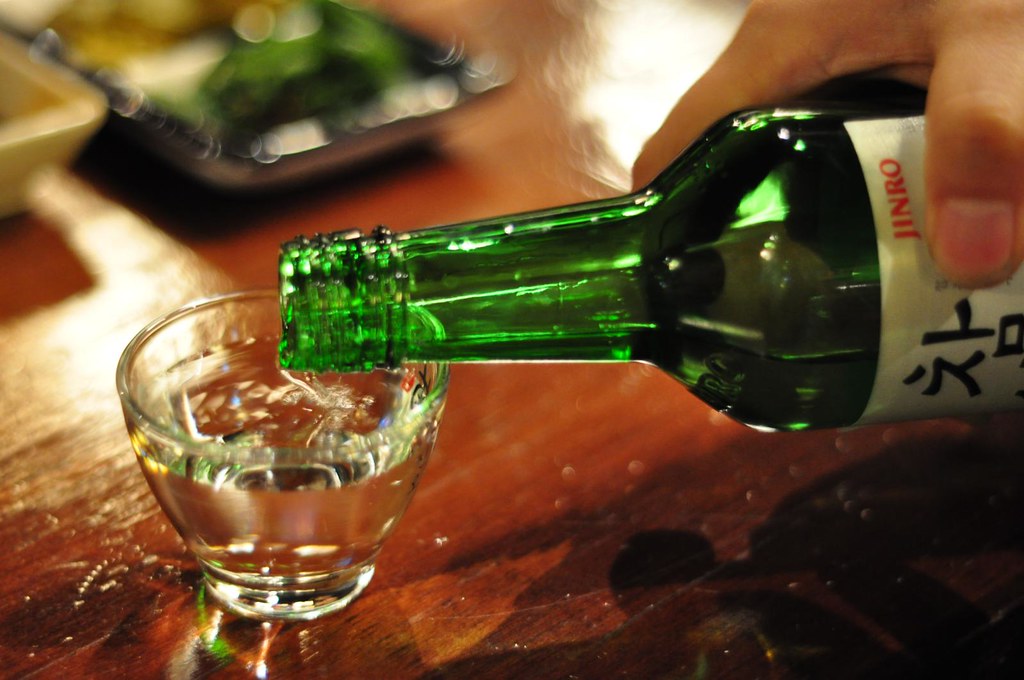
Drinks, especially soju (a clear Korean spirit) and beer, come with their own small rituals. Some guides say these are among the customs that hold on most firmly, even as younger Koreans relax others.
- Pour for others, not yourself. Keep an eye on your neighbors' glasses. In formal settings, do not fill your own glass.
- Receive with two hands. When an elder pours for you, hold your glass with both hands, left palm under the cup and right hand holding it, and bow your head slightly.
- Turn away to drink. When drinking in front of an elder, turn your head away and cover your mouth and cup with your hands. A small turn is enough; you don't need to swivel in your chair.
When it does not apply: pouring with one hand for a friend your own age is generally fine and common, and with a close friend one hand for receiving may be fine too. According to some guides, Gen Z Koreans are easing up on many older drinking customs, but the two-hands-and-turn-away combination is one of the more persistent ones. If an older person is at the table, use it.
What locals let slide, and the internet myths
Online lists can make a Korean meal sound like an exam. In practice, table manners are relaxed in casual restaurants. What tends to matter is a handful of habits, especially around older people.
Worth your effort: chopsticks never upright in rice, bowls on the table, a clean spoon in shared dishes, and the age-based courtesies when elders are present.
Unconfirmed: claims such as slurping noodles being rude, or that you must clear every plate. We found no reliable source either way, so don't stress over them; watch what the people at your table do.
A real-life momentSay a coworker invites you to a barbecue dinner with her parents. When everyone sits down, you wait until her father picks up his spoon. Your coworker takes the scissors and gives her parents the first pieces off the grill. When her father lifts the soju bottle toward you, you hold your glass with both hands, nod slightly, then turn a little to the side to sip. A few minutes later, you notice his glass is empty and refill it.
FAQ
Is it rude to pick up your rice bowl in Korea?
Yes, in Korea bowls stay on the table during the meal. Eat rice and soup with your spoon instead of lifting the bowl or drinking from it.
Do you tip at restaurants in Korea?
No. Tipping is not required or expected. Avoid leaving loose cash on the table, since staff may think someone forgot it.
Are side dishes free to refill in Korea?
Ordinary banchan and water generally come at no extra charge. Special or more expensive side dishes may not be free, and some restaurants charge for extra lettuce, so ask if you are unsure.
Can I pour my own drink in Korea?
In formal settings, don't fill your own glass; pour for others and let them pour for you. Among friends your own age, pouring with one hand is generally fine.
Do I have to wait for the oldest person before eating?
When you eat with elders, yes: wait until the eldest person picks up their spoon. Among peers or at a casual lunch, nobody keeps track.
Before you go
Before you go, remember the core four: let the eldest start, keep chopsticks out of the rice and bowls on the table, pour for others with two hands when elders are present, and skip the tip. Beyond that, take your cues from the people you are eating with, use the table call button or self-service banchan station when there is one, and ask staff about refill charges for special side dishes or extra lettuce. Getting a small thing wrong at a casual restaurant is no big deal; making the effort with older Koreans is what counts.
Sources
- TABLE MANNERS — Dgram (publisher unconfirmed; government-linked per memo)
- Sujeo — Wikipedia
- Etiquette in South Korea — Wikipedia
- Drinking culture of Korea — Wikipedia
- Korea Restaurant Etiquette 2026 - Korea Travel Guide — TripKorea (secondary guide)
- Korean Restaurant Etiquette Guide 2026: Banchan, Sharing & Paying — Lovekorea (secondary guide)
- Korean Table Etiquette: Spoons, Chopsticks, Shared Dishes, and Pouring Drinks — Atlas Lab Studios (blog)
- Memorize 8 Korean Dining Etiquette Rules Before You Go — Korean Explorer (blog)
- Inside Korea's Drinking Culture: What to Order, How to Pour, and Why the Youngest Person Pays Attention — Seoul Korea Asia (blog)
- Korean Drinking Etiquette: Pouring Manners — Kimbap Life (blog)
- Banchan (반찬, Side Dish) Refills in Korean Restaurants — Kimbap Life (blog)
- Korean Banchan: 5 Things Every Foreigner Should Know About Korean Side Dishes — Korean Glimpse (blog)
This article was researched from the sources listed below, drafted with AI assistance, and reviewed by Editor Yescat before publishing. Found an error? Contact us via the Contact page. Last reviewed: 2026-11-25.
Comments
Post a Comment